⚠️ Warehouse relocation — dispatch paused until 20 April💸 Buy 3 or more and save 15%🚚 Free shipping on orders over $199 AUD🛒 FIRSTORDER15 for 15% OFF
Au Peptide Labs (APL)
ShopAbout UsFAQCOAsCalculatorPartnersTrack OrderContact
Au Peptide Labs (APL)

Menu

ShopAbout UsFAQCOAsCalculatorPartnersTrack OrderContact

Your Cart

0 items

Your cart is empty.

SubtotalA$0
  • Australian Warehouse
  • Third-Party Tested
  • Fast AU Shipping
  • Research Use Only
Shipping PolicyRefund & Replacement PolicyResearch Use DisclaimerTerms & ServicePrivacy PolicyContact
(c) 2026 Au Peptide Labs (APL). All rights reserved.
99%+ PurityLab-grade stock
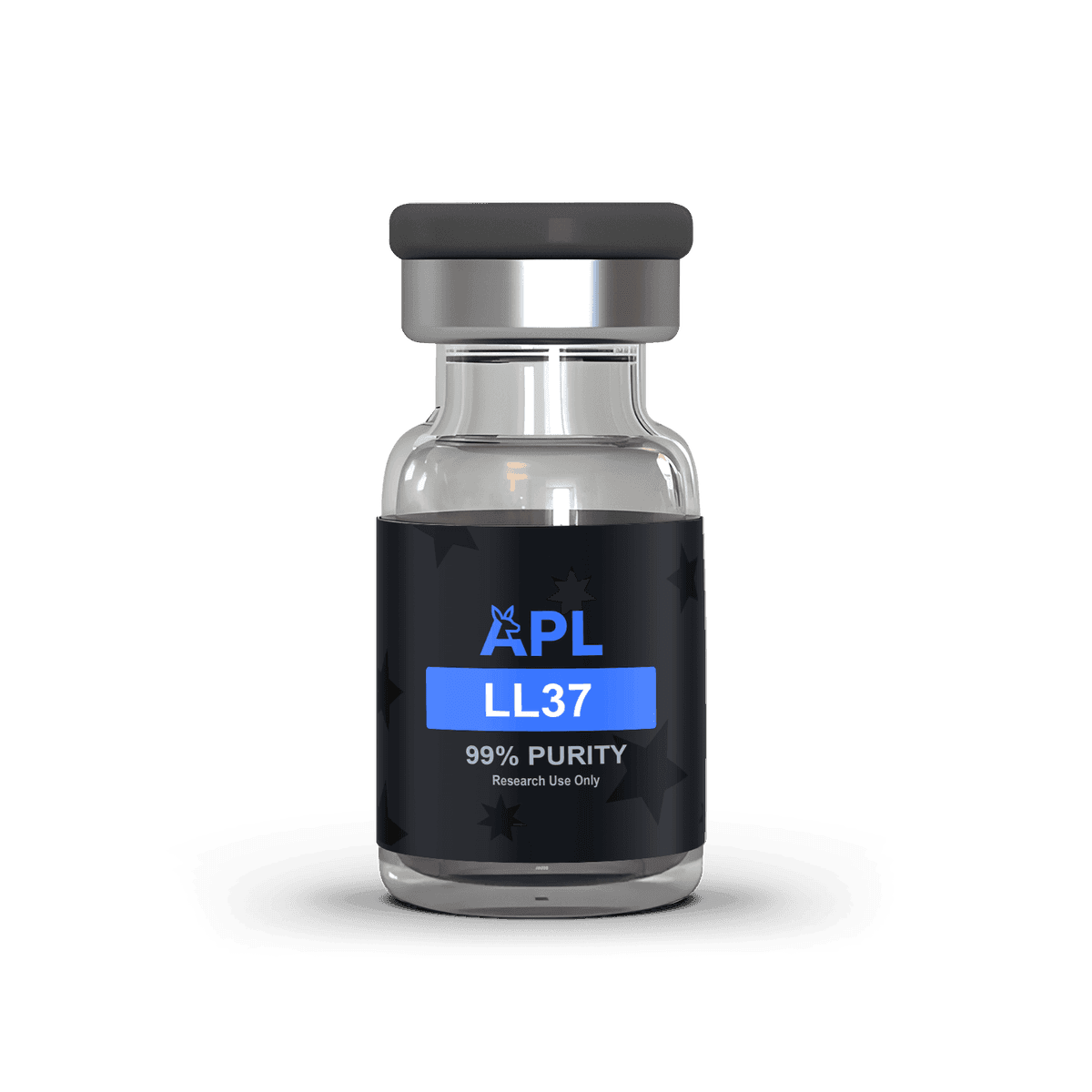
LL-37 product image

Format

Sealed research vial

Trust signal

COA-backed inventory

SOLD OUT

99%+ Purity

LL-37

Lab-grade supply. Limited AU stock.

A$279

Select options below

Size

Select one

Select your preferred options to continue.

Notify me when available

Fast AU dispatch, tracked delivery, and documentation-ready inventory.

Why labs buy from APL

High purity, consistent supply, and fast AU-wide dispatch.

Certificate of Analysis

COA library

Browse the current COA library and available product documentation.

View COA library

Overview

LL-37 is presented here as a laboratory catalogue entry for research environments that need clear identification, labelled variants, and direct access to supporting records. The current listing includes 2 labelled variants: 5mg and 10mg. That structure keeps the page useful as both a procurement reference and an indexable resource covering stock visibility, pricing context, and documentation.

Within the wider Au Peptide Labs catalogue, LL-37 sits alongside Retatrutide, Tesamorelin, and Ipamorelin. Researchers often review neighbouring compounds before selecting a comparator or deciding which sequence belongs in a screening panel. Keeping those internal paths close to the product page improves traceability and helps laboratory buyers compare materials without relying on vague or consumer-style copy.

Related Products

View all
Retatrutide product image

Retatrutide

A$279.99

Tesamorelin product image

Tesamorelin

A$169.99

Ipamorelin product image

Ipamorelin

A$98.2

MOTS-c product image

MOTS-c

A$94.99

Browse Inventory

Explore the full catalogue

View all products

Research Background

In research literature, LL-37 is generally treated as a short research peptide reviewed in cell-migration, matrix-signalling, and antimicrobial assay models. BPC-157 is a 15-amino acid pentadecapeptide derived from the partial sequence of human gastric juice protein BPC. In cell-based models it has been studied for interactions with NO/eNOS signalling, VEGFR2-mediated angiogenic pathways, and focal adhesion kinase (FAK)/paxillin complexes relevant to cell-migration assays. TB-500 corresponds to the active fragment of thymosin β4 containing the actin-sequestering LKKTET motif; it binds G-actin with high affinity, reduces the G/F-actin ratio, and modulates cell migration and angiogenesis signalling in scratch-assay models. LL-37 is a 37-residue human cathelicidin antimicrobial peptide (the C-terminal domain of hCAP18) that adopts an amphipathic α-helix at physiological ionic strength; it disrupts bacterial membranes, signals through formyl-peptide receptor-like 1 (FPRL1/FPR2), and modulates innate immune pathway outputs in human cell models.

Research panels combining these peptides often examine matrix remodelling, angiogenic marker expression, or innate immune signalling under well-defined in vitro conditions. Because each peptide operates via distinct molecular targets, selectivity controls and appropriate receptor antagonists are important experimental design considerations. For laboratory teams, the practical emphasis is usually on sequence identity, receptor or pathway relevance where documented, and whether LL-37 behaves consistently across stability, purity, and analytical verification workflows. Variant labels on this page support clearer internal referencing when multiple labelled variants are under review.

Potential Research Applications

Potential research applications for LL-37 should be framed strictly in analytical and laboratory terms. Typical reasons a team might review this product page include:

  • BPC-157 NO/eNOS and VEGFR2 pathway studies in vascular endothelial or gastric epithelial cell models.
  • TB-500 G-actin sequestration and F/G-actin ratio assays alongside cell-migration and scratch-wound readouts.
  • LL-37 antimicrobial membrane disruption studies and FPRL1-mediated innate immune signalling assays.
  • Comparative matrix-signalling panels contrasting short peptide fragments with full-length protein counterparts.

Laboratory Handling & Storage

Handling decisions should always follow the vial label, internal SOPs, and any product-specific documentation. A conservative laboratory baseline for LL-37 is:

  • Protect vials from UV light and prolonged ambient temperature exposure — short peptides with aromatic residues are susceptible to oxidative degradation.
  • Label each peptide clearly when multiple short fragments are open simultaneously; visual similarity of lyophilised powders creates real mix-up risk.
  • Reconstitute LL-37 in low-salt buffer first (high salt promotes immediate aggregation), then adjust ionic strength for the assay condition.
  • Confirm sequence identity and purity against COA before use — degradation fragments of these peptides can generate false positives in migration or signalling assays.

Certificate of Analysis (COA)

If a product-specific file is not attached to this listing, the wider COA library remains the correct reference point for current published documentation. The COA section is useful for confirming how the product is labelled in the catalogue, whether purity information has been published, and whether the laboratory record for the material is complete before bench use.

When teams compare LL-37 with Retatrutide, Tesamorelin, and Ipamorelin, COA access also helps keep comparator decisions grounded in documented material identity rather than assumption. That is especially important for research pages that combine pricing, variant selection, and analytical records on a single URL.

Certificate of Analysis

COA library

Browse the current COA library and available product documentation.

View COA library

Frequently Asked Questions

What does this LL-37 page cover?

It brings together 2 labelled variants: 5mg and 10mg, current pricing context, stock visibility, COA access, and internal links to related catalogue pages so a laboratory buyer can review the material from a single reference URL.

How is LL-37 usually positioned in research discussions?

LL-37 is generally discussed as a short research peptide reviewed in cell-migration, matrix-signalling, and antimicrobial assay models. The most relevant background is sequence behaviour, pathway or receptor context where documented, and analytical consistency under controlled laboratory conditions.

How should LL-37 be handled after receipt?

Use the label, COA, and internal SOPs as the primary guide. In general, store the material under controlled laboratory conditions, minimise avoidable environmental exposure, and keep variant tracking records current.

Is LL-37 accompanied by a certificate of analysis?

This page links the broader COA library when a product-specific document is not attached. Laboratories should use the published documentation set that is currently available for the listing.

Is LL-37 sold for human or veterinary use?

No. The page should be interpreted strictly in a research and laboratory context. It does not provide dosage guidance, treatment claims, or human or animal use instructions.
Research Resources

Read product FAQs

Review broader research, storage, compliance, and ordering questions.

Browse COAs

Check published analytical documents across the current product library.

Review shipping policy

Confirm dispatch expectations and delivery terms before placing an order.