
Choose peptides when your target presents a large, flat protein–protein interaction (PPI) interface; choose small molecules when oral bioavailability, intracellular enzyme access, or cost-of-goods constraints dominate the programme. That single rule resolves the majority of early modality decisions, but three refinements sharpen it further:
- Interface area > ~1,500 Ų: PPIs typically occupy 1,500–3,000 Ų, a surface too large and flat for most small molecules to engage with sufficient affinity. Cyclic or stapled peptides are the preferred starting point.
- Oral delivery or intracellular enzyme inhibition required: favour small molecules. Their membrane permeability and metabolic stability give them a structural advantage that peptides can only partially recover through extensive modification.
- Extracellular receptor or secreted target with parenteral delivery acceptable in the programme: peptides are viable and often superior in selectivity, particularly for GPCRs where peptide agonists can achieve sub-nanomolar potency.
One countercheck before committing: manufacturing cost scales unfavourably for peptides above roughly 30–40 residues. For research-stage procurement in Australia, Aupeptidelabs provides locally stocked, certificate-verified peptides that eliminate customs delays and support rapid experimental iteration. The pharmacological consensus frames the core trade-off as specificity versus pharmacokinetics: peptides win on the former, small molecules on the latter, and the programme's biology should determine which matters more.
What do 'peptides' and 'small molecules' actually mean in drug discovery?
Precision in terminology prevents misaligned expectations at the project-planning stage.
- Peptides: amino-acid chains typically comprising 2–50 residues, with molecular weights ranging from roughly 200 Da to approximately 6,000 Da. In drug discovery, the operative range is usually 5–40 residues for synthetic and semi-synthetic therapeutic candidates. Regulators generally treat peptides below 40 amino acids as chemical entities subject to small-molecule-style CMC requirements, while longer sequences attract biologic-style oversight.
- Small molecules: organic compounds with molecular weights below approximately 500 Da (the Lipinski Rule of Five upper bound), characterised by defined, rigid scaffolds, good membrane permeability, and established synthetic routes. The vast majority of oral drugs on the market are small molecules.
- Scope of this comparison: monoclonal antibodies, fusion proteins, and large biologics (>10 kDa) are excluded. The focus is on synthetic peptides, cyclic peptides, peptidomimetics, and conventional small molecules as therapeutic agents or research probes.
How do physicochemical differences shape binding and drug design?
The intrinsic molecular properties of each modality determine which targets are tractable and which formulation challenges will arise downstream.
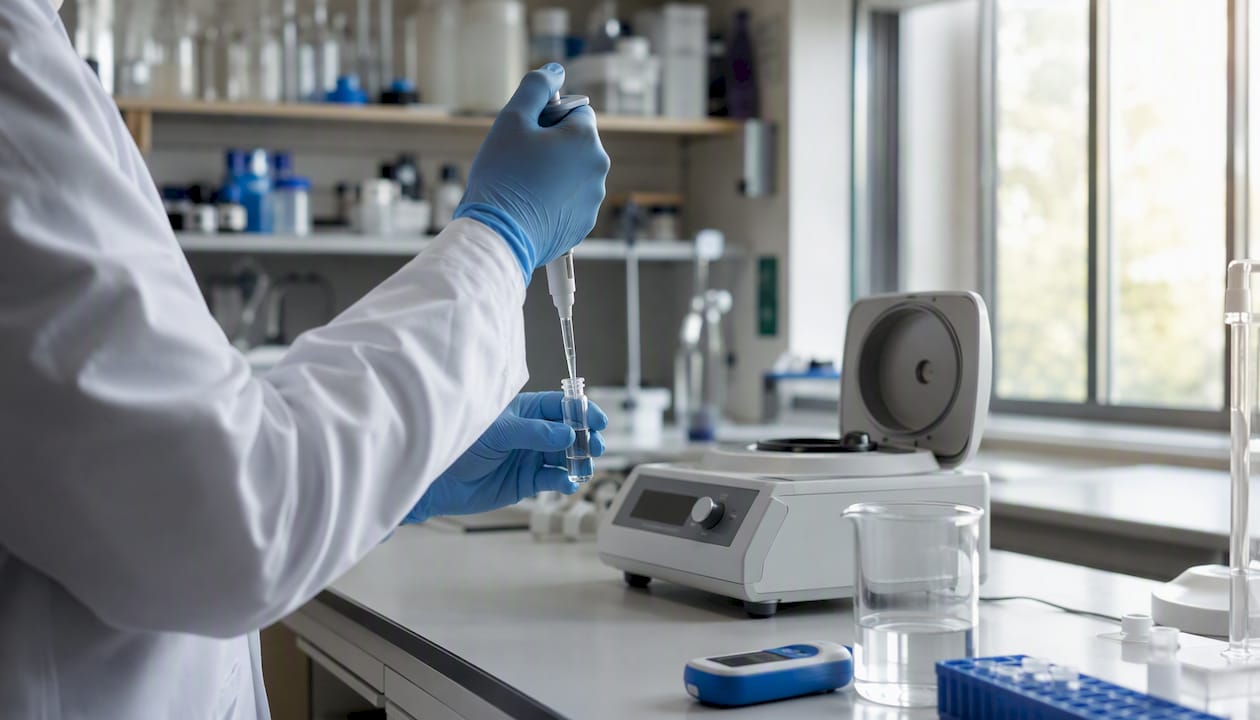
| Property | Peptide | Small molecule | Practical consequence | | --- | --- | --- | --- | | Molecular weight | ~500–6,000 Da | <500 Da | Peptides engage larger binding surfaces; small molecules fit deep pockets | | Binding footprint | 1,500–3,000 Ų | — | Peptides suited to PPI interfaces; small molecules suited to enzyme active sites | | Conformational flexibility | High (linear); moderate (cyclic) | Low to moderate | Peptides lose entropy on binding; cyclisation partially compensates | | H-bond donors/acceptors | High | Constrained by Ro5 | Peptides form extensive H-bond networks; small molecules limited to ~5 donors | | Membrane permeability | Poor (linear); improved (cyclic) | Generally good | Small molecules access intracellular targets more readily | | Oral bioavailability | Typically <2% (linear) | Often around 20% | Small molecules dominate oral delivery; peptides require formulation strategies |
Several practical rules follow from this table:
- Linear peptides above ~700 Da rarely achieve meaningful passive membrane permeability without modification; cyclisation or N-methylation can shift this substantially.
- Small molecules with logP > 5 or MW > 500 Da begin to lose the permeability advantage, entering a 'beyond Rule of Five' space where macrocycles and peptidomimetics compete.
- For targets with shallow, featureless binding sites (many PPIs), the extended contact surface of a peptide provides binding energy that no small molecule can replicate without a fragment-growing campaign of considerable length.
What do manufacturing costs and timelines look like?
Manufacturing complexity is a direct function of peptide length and the number of non-standard modifications.
Solid-phase peptide synthesis (SPPS) is the standard manufacturing route for peptides up to approximately 50 residues. Cost-of-goods scales with chain length, the number of coupling cycles, and the purification burden (preparative HPLC). Peptides above 30 residues with multiple modifications can cost an order of magnitude more per gram than a comparable small molecule at research scale. Small-molecule synthesis benefits from decades of process chemistry optimisation, established reagent supply chains, and lower purification costs at scale.
Statistic: A substantial number of peptide drugs have received regulatory approval globally, with many in active clinical development, reflecting a maturing manufacturing and regulatory infrastructure for this modality.
Australia-specific considerations:
- Research-use peptides are subject to separate import and laboratory-use requirements.
- CMC expectations for peptide INDs and CTAs include impurity profiling (related peptides, truncated sequences, oxidation products), batch release testing, and stability data under ICH conditions.
- For research reagents, Australian peptide manufacturers and suppliers with local stock eliminate the customs clearance delays that affect imported research-grade material, a practical advantage when experimental timelines are tight.
Timeline to first-in-human for a peptide programme typically runs 4–7 years from hit identification, comparable to small molecules, though the CMC development path differs substantially in the analytical methods required.
How should Australian researchers source and quality-check research peptides?
Procurement decisions made at the reagent stage have direct consequences for experimental reproducibility. The following numbered checklist applies to any new peptide lot entering an Australian research laboratory.
- Comparative analysis of AI applications in small‑molecule and peptide drug discovery
- A comprehensive review on current advances in peptide drug development and design
- Therapeutic peptides: current applications and future directions
- Therapeutic peptides: chemical strategies fortify peptides for enhanced disease treatment efficacy
- Peptide drugs: industry trends and clinical development overview
- Pharmacological consensus on peptide versus small‑molecule trade‑offs (review)
- Peptides are everywhere. Here’s what you need to know.
Pro Tip: For each new peptide lot, run a minimum QC panel before committing to a full assay cascade: HPLC purity check (reverse-phase C18, UV 214 nm), ESI-MS identity confirmation, and a solubility test in your assay buffer at the working concentration. This three-point panel takes less than a day and eliminates the most common sources of assay failure before you invest in cell-based or in vivo work.
The modality decision is more tractable than the literature suggests
The peptides-versus-small-molecules debate is often framed as a binary, with each modality assigned a fixed set of virtues and liabilities. The more useful framing is that the decision is largely determined by three variables: target geometry, required route of administration, and the programme's tolerance for manufacturing complexity. When those three inputs are defined, the modality choice follows with reasonable confidence from the evidence base.
What the conventional literature underweights is the cost of a late modality switch. Teams that commit to a small-molecule approach for a PPI target because of oral-delivery aspirations frequently spend two to three years in a fragment-growing campaign before conceding that the interface is undruggable by that route. The earlier a project team maps the binding interface area and tests a cyclic peptide scaffold, the earlier it can make an informed decision rather than a default one.
The second underweighted point is that peptide ADME liabilities are more tractable than they were a decade ago. Lipidation, cyclisation, and oral absorption enhancers have each produced approved drugs. That trajectory is a template, not an exception.
For Australian research teams, the practical constraint is often reagent quality and supply speed rather than chemistry. A programme stalled by inconsistent peptide lots or customs delays loses weeks that compound across a development timeline. Local sourcing from a supplier with verified purity data and same-day dispatch is not a minor convenience; it is a reproducibility control.
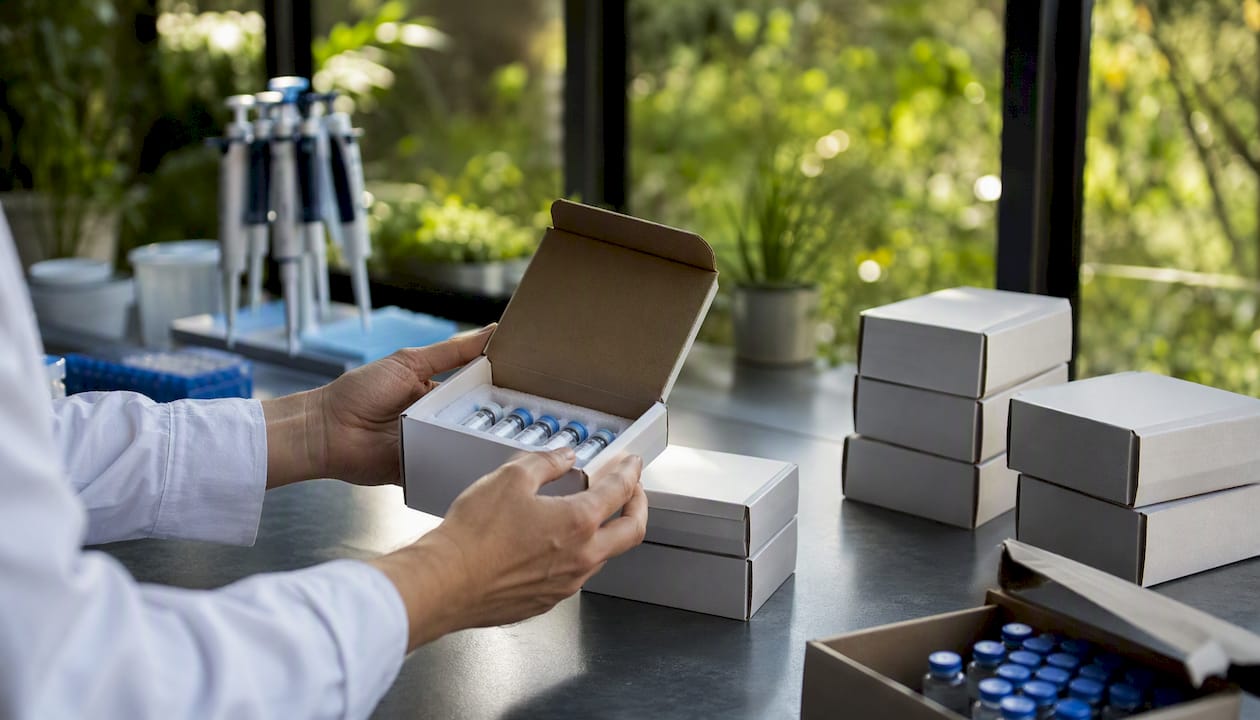
Aupeptidelabs: research-grade peptides, stocked and dispatched in Australia
For research teams working through the modality decisions described in this article, reagent quality and supply reliability are not secondary concerns. Aupeptidelabs stocks an extensive catalogue of high-purity research peptides at purity levels exceeding 99%, each accompanied by third-party certificates of analysis covering HPLC purity and mass identity. Every order is dispatched from Australia within one business day, removing the customs clearance delays that routinely affect imported research material and disrupting experimental timelines.
The catalogue covers peptides relevant to PPI research, GPCR pharmacology, metabolic targets, and neuropeptide programmes, with custom and bulk orders available for teams requiring non-standard sequences or larger quantities. Laboratory consumables are listed under Lab Supplies. Aupeptidelabs holds a verified customer satisfaction rating of 4.6/5. To source high-purity research peptides in Australia with same-day dispatch and full QC documentation, place your order directly through the Aupeptidelabs online store.