
Discreet packaging means sending a parcel in plain, generic materials so that nobody handling or seeing the box can tell what is inside or, in many cases, which business sent it. It is a presentation standard for the outside of the parcel. It is not anonymity: the carrier, the retailer and the recipient still hold the full shipping record, and Australian carrier rules still require a sender name, a return address and a legible delivery address.
This guide sets out what the term covers, what a discreet parcel looks like, which details remain visible, and what the term means for research peptide shipments within Australia.
Au Peptide Labs supplies research peptides for laboratory research use only, each batch independently tested with a certificate of analysis.
What discreet packaging means
The definitions used across the shipping industry converge on one point. Discreet packaging is designed to conceal the contents of a parcel, and often the identity of the sender, so that the product cannot be inferred from the exterior. In practice that involves three layers:
- The container: a plain carton or satchel without product imagery, brand names or descriptive text.
- The label: a delivery label and sender block that do not describe the contents, for example a neutral sender name rather than a name that advertises the product category.
- The paperwork: invoices, packing slips and confirmation messages that are enclosed or sent separately and that do not announce the contents on the outside.
The term is also used interchangeably with discreet shipping, quiet shipping and plain packaging. The emphasis differs slightly: "packaging" refers to the physical box and its markings, while "shipping" extends to the sender name, the notification emails and the billing descriptor. A complete discreet service addresses all of these, not only the carton.
What a discreet parcel looks like
A discreet parcel is deliberately unremarkable. Typical features include a plain brown or white carton or a standard courier satchel, a single address label on the largest flat surface, no promotional tape, and no logos or product claims. The goal is that the parcel resembles any ordinary delivery.
The less obvious part is that a plain box can still give itself away. A packaging guide from PacksDo lists the small cues that remain: the shape (a long, thin box reads as a bottle), a mismatch between size and weight, rattling from loose contents, visible words on tape or stickers, a sender name that describes the product, and thin bag material that shows the outline of what is inside. Effective discreet packaging therefore involves right-sizing the carton, immobilising the contents and using opaque, sturdy materials.
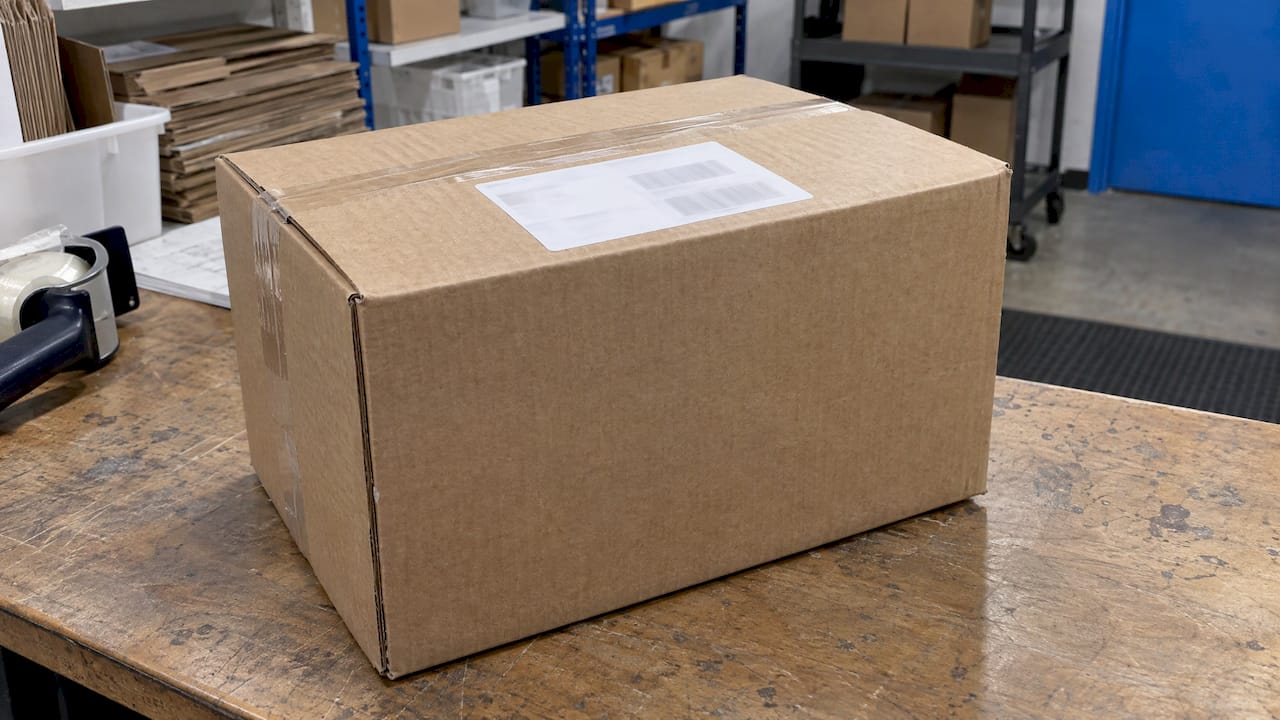
For temperature-sensitive or fragile laboratory goods, those same measures serve a second purpose. Protective inserts, correctly sized cartons and sealed inner containers that prevent movement also protect the product in transit. Our guide to peptide packaging materials for Australian labs covers the protective side in more detail.
Details that still appear on a discreet parcel
Discreet does not mean unlabelled. Several elements must remain on any parcel carried by a postal operator.
The delivery address
Australia Post's Parcel and Freight Preparation Guide requires labels to be clearly visible, with no strapping or tape covering them, placed on the largest flattest surface of the parcel. Where packaging is reused, all old labels and barcodes must be removed or hidden. The same guide specifies that the deliver-to block begins with "To:" in Arial 12pt.
The sender block
The same guide requires the sender block to open with "Sender:" or "From:", set in Arial 10pt and visibly smaller than the delivery address. Australia Post's addressing guidelines add that a return-to-sender address should follow the same format as the recipient address and sit in the top left-hand corner or on the reverse of the item.
A neutral sender name is therefore permissible, but a sender block cannot simply be removed. For domestic shipments created through Australia Post's shipping API, the sender name field is mandatory (up to 40 characters), while the business name is optional.
The barcode and tracking record
The label carries a scannable barcode, and every scan creates a tracking record. Discreet packaging is about what strangers can read from the outside, not about what the carrier knows. PacksDo makes the same point: your own records still need the real contents, and the carrier still needs a correct delivery address.
Discreet is not anonymous
The most common misreading is that discreet shipping means no identification, no record or no trace. It does not. A retailer must identify itself in its dealings with consumers, and carriers require a sender name and return address on most domestic parcels. An Australian retailer's explanation of discreet shipping notes that the shipping label, the bank statement and the tracking number still leave a transaction trail.
It adds that certain goods, such as dangerous substances and restricted items, must be labelled according to state and territory regulations, and that retailers must still include a return address and follow carrier rules while using a neutral sender name.
There is also a carrier-side limit. Australia Post's General Terms and Conditions allow the carrier to refuse an item when the recipient's name and address are not legible, or when the covering carries text or images that could be considered offensive or defamatory. Plain, legible and inoffensive is the standard a discreet parcel already meets.
In short, discreet packaging answers the question "what can a bystander read?" It does not answer "what can a carrier, regulator or border agency see?"
What discreet packaging means for a peptide shipment
For research peptides, the phrase has a specific operational meaning. A discreet peptide parcel carries no product names, compound names, category descriptors or claims on the carton or label, uses a neutral sender presentation, and is sized and cushioned so the shape and sound of the contents reveal nothing. Inside, the documentation (batch certificate of analysis, packing list) accompanies the goods as it would for any laboratory consignment.
It does not alter the status of the product. Research peptides sold by Au Peptide Labs are supplied strictly for laboratory research and not for human or veterinary use, and discreet packaging does not change what the product is, how it must be stored or the regulatory framework that governs it. Nor does it replace documentation: the purchaser's own records should always reflect the actual contents of every consignment.
Why laboratories and research buyers ask for it
Several practical reasons explain why discreet packaging is requested by research buyers, and none of them involves concealment from authorities.
- Reducing theft and opportunism. Parcels left at a loading dock, reception desk or shared mailroom are less likely to attract attention when the exterior does not advertise high-value reagents.
- Commercial confidentiality. A pharmaceutical company or university group exploring a compound class may not want a supplier's name or a compound category visible to couriers, building staff or other departments. Project interest is itself commercially sensitive.
- Individual privacy. Independent researchers receiving goods at a residential or shared address may reasonably prefer that neighbours and housemates cannot read the contents from the carton.
- Neutral handling. Plain packaging avoids misidentification by couriers and reduces the chance that a parcel is treated as something it is not.
These reasons are about the exterior of the parcel only. They are compatible with full and accurate declarations to any carrier or authority that requires them.
Au Peptide Labs dispatches from Melbourne, with orders leaving within one business day.
Our perspective
Discreet packaging is frequently discussed as though it were a single feature. In laboratory procurement it is better understood as a set of controls applied to one stage of the supply chain: the exterior of the consignment in transit. Each control has a defined purpose. A neutral carton and label limit information exposure to couriers and bystanders. Correct sizing and internal restraint prevent contents from signalling their form.
We apply these controls alongside, not instead of, the documentation that research purchasing requires. Every batch is independently third-party tested to a purity of 99% or above, and a verifiable certificate of analysis accompanies the product, so the record of what the consignment contains is complete even when the exterior reveals nothing. We dispatch from Melbourne within one business day, so the typical parcel travels as an ordinary domestic delivery with no international paperwork attached.
Our position is that discretion and traceability are complementary. A laboratory needs the outside of the box to be uninformative and the inside of the file to be exhaustive. Our products are supplied strictly for laboratory research and not for human or veterinary use, and we regard accurate records, correct addressing and compliant storage as part of the same standard of care that discreet packaging belongs to.
Au Peptide Labs editorial team
How to assess whether a parcel is discreet
Research buyers evaluating a supplier can apply a short checklist to the exterior of a consignment:
- Label text: does the sender name or any marking name a compound, category or claim?
- Carton and tape: is the carton plain, with no printed product imagery or branded tape describing the contents?
- Fit: is the carton sized to the contents, so that the shape does not suggest a bottle, vial or tube?
- Movement: is the interior restrained so that nothing rattles?
- Material: is the outer layer opaque and sturdy enough that outlines do not show through?
- Records: are the invoice and certificate of analysis accurate, and does the billing descriptor and confirmation email follow the same neutral approach?
- Address: is the delivery block complete and legible? Our guide to the correct shipping address format for peptides lists the common errors that cause delays.
Addressing and speed matter as much as appearance. A parcel that waits several days at a depot is more exposed than one delivered the next day, which is why many laboratories pair discreet packaging with faster service. Our comparisons of express and standard peptide shipping and metro delivery times explain what to expect.
Discreet packaging with Au Peptide Labs
Au Peptide Labs supplies high-purity research peptides held in Australia, each batch independently third-party tested to 99%+ purity with a verifiable certificate of analysis. Orders are dispatched from Melbourne within one business day in discreet packaging. Express Post is available for $10.
Frequently asked questions
What does discreet packaging look like?
A discreet parcel is a plain carton or standard satchel with a single delivery label and no logos, product names or descriptive tape. The sender block still appears, since carriers require it, but it uses a neutral name. Good discreet packaging also avoids shape and sound cues, such as a long thin carton or rattling contents.
Does discreet shipping mean no ID or no record?
No. Discreet refers to what can be read from the outside of the parcel. The carrier still needs a sender name, a return address and a scannable barcode, and the order still produces tracking, invoice and payment records.
Does discreet packaging change how research peptides must be used?
No. Packaging affects only the exterior of the consignment. Research peptides remain supplied strictly for laboratory research and not for human or veterinary use, and storage and handling follow the supplier's documentation.
Sources
- Parcel and Freight Preparation Guide, Australia Post
- Addressing guidelines, Australia Post
- Create domestic shipments, Australia Post developer documentation
- General Terms and Conditions, Australia Post
- International Contract Services Product Guide, Australia Post
- Electronic Advance Data (EAD), Australia Post